Throwback Thursday - The Ice Storm of 1998
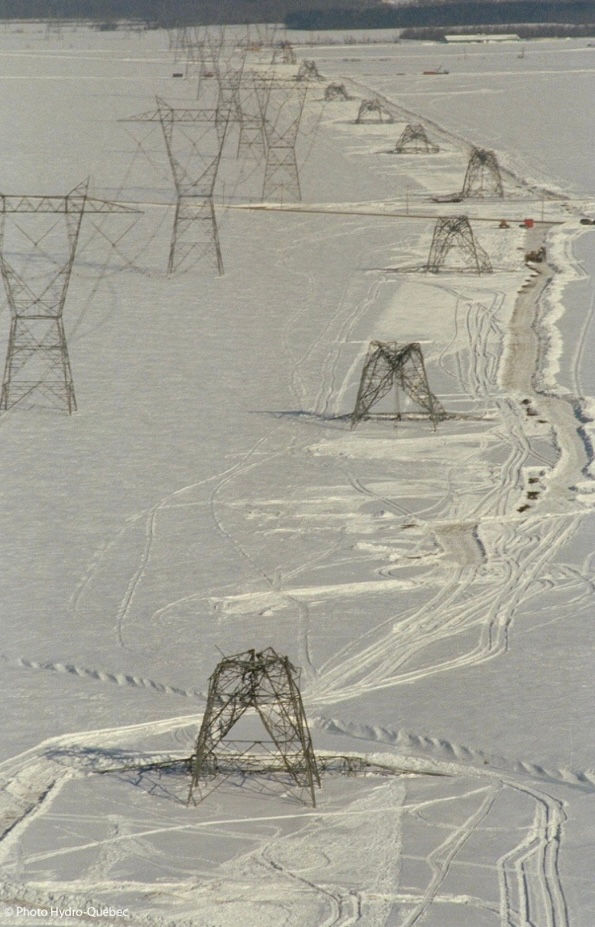
From January 4 to 10, 1998, parts of eastern Ontario, Quebec, New Brunswick, and Nova Scotia, and bordering areas from New York to Maine, were battered with freezing rain and ice pellets. Massive damage to trees, homes, and infrastructure – including electrical infrastructure – caused at least 37 fatalities and led to millions of people without power. Major bridges were closed for fears of weight intolerances. Falling ice chunks became a severe hazard. Power lines completely collapsed for kilometers at a stretch. Large areas of Montreal and Ottawa were completely shut down. Everything was coated with up to 110mm of heavy ice.
The number of deaths is contested but is believed to be between 35-40 people. Environment Canada reported that at least 25 people died in the areas directly impacted by the ice, primarily from hypothermia. Several deaths were contributed to carbon monoxide poisoning as people used BBQ’s and propane stoves to try to heat their homes. It was also reported that 12 people died from flooding further south from the same storm system. Additionally, almost 1000 people reported varying degrees of injuries. Over 600,000 people had to evacuate their homes.
The loss of electricity meant farmers could no longer provide adequate water, heat, and ventilation to their animals, leading to a large number of animal deaths. Several barns collapsed under the weight of the ice, killing the animals inside. Millions of trees were damaged, and the maple syrup and orchard industries suffered massive losses.
Roads were impassable due to severe ice build-up and fallen trees and broken power lines, making emergency response almost impossible. On January 7 the Canadian Forces deployed over 16,000 troops, making it the largest operational deployment since the Korean War. In some areas of Quebec, CN locomotives were moved off the tracks and used to provide power to communities.
Some areas had power restored within days, for others it took months. Damage to the power grid was so severe that it could not be repaired, it had to be rebuilt. Material damage is estimated at $2 billion CDN in Quebec alone. Overall damage estimates are $4-6 billion USD for all affected areas.




Comments